Suzhou POLESTAR METAL PRODUCTS CO., LTD
Nhà cung cấp phần cứng tùy chỉnh đáng tin cậy nhất!
Tập trung vào các phần cứng đặc biệt nhỏ!
Suzhou POLESTAR METAL PRODUCTS CO., LTD
Nhà cung cấp phần cứng tùy chỉnh đáng tin cậy nhất!
Tập trung vào các phần cứng đặc biệt nhỏ!


| Cân nặng: | Khác nhau tùy theo thiết kế và chất liệu | Chất lượng: | ISO9001 Rohs CE |
|---|---|---|---|
| Người mua thương mại: | siêu thị | Cài đặt: | treo tường |
| Dịch vụ của chúng tôi: | Bản vẽ của khách hàng OEM ODM | Quy trình sản xuất: | Đúc, rèn, gia công CNC, dập |
| thiết bị: | Máy dập CNC, máy uốn CNC | Ứng dụng: | Công nghiệp, Ô tô, Nội thất, Xây dựng, Điện tử |
| Làm nổi bật: | 2 row 24 pole terminal block,Eurostyle screw terminal strip,versatile barrier strip with warranty |
||
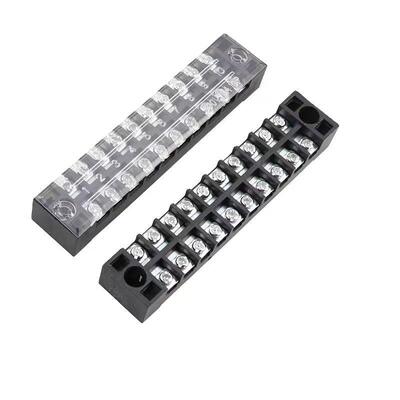
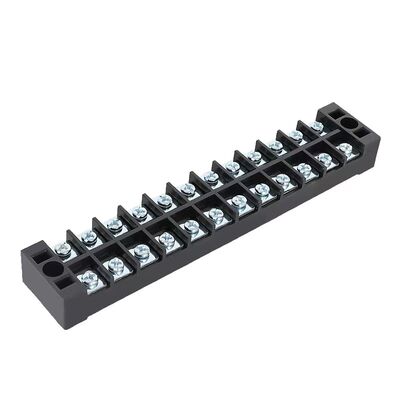
Ultimate Versatile Terminal Block Strip 2 Row 24 Pole Eurostyle Screw Terminal Barrier Strip
A Terminal Block Strip (also known as a barrier strip or terminal strip) is a modular, insulated block that securely connects or terminates two or more wires together. It is one of the most fundamental components in electrical and electronic engineering.
It typically consists of a long strip made of insulating material (like plastic or ceramic) housing multiple metal terminals (contacts). These terminals usually feature a screw mechanism that clamps down on the wire, creating a secure, gas-tight, and removable connection without the need for soldering. They act as a safe and organized junction point for wires, allowing for easy maintenance, troubleshooting, and circuit modifications.
Insulator (Housing/Base):
PA66 (Nylon 66): The most common plastic. It offers high mechanical strength, good electrical insulation, and heat resistance. Often graded as V0 for flame retardancy.
PBT (Polybutylene Terephthalate): Offers high durability and resistance to solvents and high temperatures.
Ceramic: Used for high-temperature applications (e.g., ovens, heaters) or high-voltage environments.
Phenolic Resin: An older material, still used in some industrial settings for its hardness and insulating properties.
Conductor (Metal Parts):
Brass: The most common material for terminals and screws. It offers good conductivity and mechanical strength at a reasonable cost.
Copper Alloy: Used when higher conductivity is required.
Steel: Often used for screws or clamps where high clamping force is needed, usually plated to prevent rust.
Plating protects the metal from corrosion and improves conductivity.
Nickel Plated: The most common finish. Provides excellent corrosion resistance and durability.
Tin Plated: Improves solderability and provides good conductivity. Common in PCB-mounted blocks.
Silver Plated: Used for high-frequency signals or very high conductivity requirements.
Unplated/Bare Brass: Less common, used in dry indoor environments where cost is the primary concern.
Voltage Rating: (e.g., 300V, 600V) The maximum voltage the block can handle safely.
Current Rating: (e.g., 15A, 20A, 30A, 50A) The maximum continuous current the terminals can carry.
Wire Gauge (AWG): (e.g., 22-12 AWG, 10 AWG) The range of wire thicknesses the terminal can accept.
Number of Positions: (e.g., 2, 4, 6, 12) How many separate circuits or connection points are on a single strip.
Pitch (Center-to-Center Spacing): (e.g., 5.0mm, 7.5mm, 9.5mm) The distance between the centers of two adjacent terminals. Crucial for PCB layout.
Mounting Type: PCB Mount (soldered directly to a circuit board), Chassis/Panel Mount (screwed into an enclosure), or DIN Rail Mount (snapped onto a standard industrial rail).
Due to their versatility, Terminal Block Strips are found almost everywhere electricity flows:
Industrial Control Panels: Connecting sensors, actuators, and PLCs (Programmable Logic Controllers).
Power Distribution: Splitting a main power source into multiple branch circuits.
HVAC Systems: Connecting thermostats, compressors, and fans.
Lighting Systems: Wiring ballasts, drivers, and fixtures in commercial buildings.
Automotive and Marine: Connecting wiring harnesses in vehicles and boats.
Test Equipment: Providing easy probe points and connections in laboratory setups.
Home Appliances: Internal wiring of ovens, washing machines, and air conditioners.
Scenario:
A commercial office building is upgrading its lighting system. The old system used fluorescent tubes hardwired directly into the ceiling. The new system uses smart LED panels that require both a main power feed (120V AC) and a low-voltage control signal (0-10V dimming) from a central lighting controller.
The Challenge:
How do you safely transition from the thick building power cables to the thinner wires inside the LED drivers?
How do you connect all 50+ LED panels to the single central dimming controller?
How do you make the system easy for electricians to troubleshoot later?
The Solution using Terminal Block Strips:
An electrician installs two Terminal Block Strips inside a junction box near the ceiling grid.
Power Distribution Strip: A Heavy Duty 600V 30A Terminal Block Strip (Nickel Plated Brass) is used. The main 120V AC power feed from the building enters one side. On the other side, individual wires run to the "Power In" terminals of each of the 10 LED drivers connected to that box. This creates a safe, organized "bus bar" for power distribution.
Signal Control Strip: A smaller 2-Row Terminal Block Strip is used for the 0-10V dimming signal. The central lighting controller's signal wire is connected to one terminal. The dimming wires from each of the 10 LED drivers are connected to the other terminals on the same row. Because the strip is a common bus, all drivers receive the exact same dimming signal simultaneously.
Why this is an "Excellent" Case:
Modularity & Safety: Instead of messy wire nuts (wire connectors) dangling in the ceiling, the system is neat, secure, and enclosed.
Ease of Maintenance: If one LED driver fails, an electrician can simply unscrew its two wires (power and signal) from the terminal block and replace the driver without touching the other 9 working lights or the main power feed. This minimizes downtime.
Scalability: If the building wants to add 5 more LED panels, the electrician can easily land the new wires into the available positions on the terminal strips.
Reliability: The screw mechanism provides a gas-tight connection that won't vibrate loose over time, unlike simple push-in connectors, ensuring the lights stay on and the dimming signal remains stable.

Bộ phận kim loại tùy chỉnh Phụ tùng công nghiệp phụ tùng Thép không gỉ / thép Dịch vụ OEM
1-3/8" Diameter Crystal Oil Rubbed Bronze Zinc Alloy Ring Pull Cabinet Knobs
Custom Metal Hardware 128mm CC Yellow Kids Corner Acrylic Train Bar Cabinet Pull Handle
Bộ sưu tập phần cứng phòng tắm 5 bộ Satin Nickel Zamak 32500 Series Value Pack
Commercial Kitchen Tools Manual Stainless Steel Lemon Squeezer Juicer
Stainless Steel Kitchen Utensils Set , 18/8 Stainless Steel Pizza Cutter
Gia đình bằng thép không rỉ bếp công cụ, bằng thép không rỉ có thể mở ra bằng tay
Thép Carbon Các loại 8.8 Đinh vít và Bu lông Phần cứng Chốt
DIN5685 Galvanised Mild Steel Chain Rigging Hardware G70 2MM - 13MM
High Precision Specialty Hardware Fasteners , Special Nuts Fasteners
Corrosion Resistant Thin Flat Washers DIN125 Steel / Copper Railway Plain Washer